Now
& then I like to dig into the history of the very rich
hymns which I’m old enough to remember and enjoyably
participated in singing back at the “little brown church in
the dell” where I grew up! 😊
This
was my favorite hymn to sing during Easter – LOVED the way it
built. And as a 9 – 10 year old kid, I loved to PUNCUATE
each word!! “Up from the grave He arose”!!
History
of Hymns: Nineteenth-century hymn celebrates the resurrection
“Up
from the Grave He Arose”
Robert Lowry
Low in the grave he lay,
Jesus
my Savior,
waiting
the coming day,
Jesus
my Lord!
Up from the grave he arose
with
a mighty triumph o’er his foes;
he
arose a victor from the dark domain,
and
he lives forever with his saints to reign.
He
arose! Hallelujah! Christ arose!
|
|
|
Robert
Lowry |
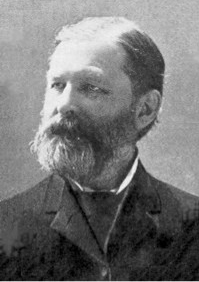
Robert
Lowry (1826-1899), the Philadelphia-born author and composer
of this hymn, was a popular Baptist preacher and educator who
served churches in Pennsylvania, New York City and Plainfield,
N.J.
Lowry
studied theology at the University of Lewisburg (now Bucknell
University), graduating in 1854 and teaching literature there
from 1869-1875. He became known for his gospel songs while
ministering in Brooklyn, collaborating often with William H.
Doane in producing gospel song collections.
Among
his most famous gospel compositions are “Nothing but the Blood
of Jesus” (UM Hymnal, No.
362) and “Shall We Gather at the River” (No. 723). He also
composed tunes for other’s texts, such as MARCHING TO ZION, a
camp meeting version of Isaac Watts’ text, “Come, We that Love
the Lord,” and NEED, a tune for Annie Hawks’ hymn, “I Need
Thee Every Hour.”
The
centerpiece of the song is the textual and musical contrast
between the stanzas and the refrain. The dirge-like stanzas in
block chords with a melody that plods in a step-wise fashion
give way to a rhythmic refrain that surges up like a trumpet
blast. Like many gospel songs, the three stanzas basically say
the same thing three different ways. Each stanza ends with
“Jesus my Lord!”—reminiscent of the early Christian
affirmation “Jesus is Lord.” (Romans 10:9-13)
Within
the Western 19th-century gospel sound, the music of this song
captures perfectly the spirit of the transition from Good
Friday to Easter Sunday.
https://www.hymnal.net/en/hymn/h/123
Another
classic “Easter” hymn (you might remember!) https://www.hymnal.net/en/hymn/h/117
One
more: https://hymnary.org/text/we_praise_thee_o_god_for_the_son_of
Ephesians
5:19 Speaking to one another in psalms and hymns and
spiritual songs, singing and psalming with your heart to the
Lord.